Dartford Waffler

26 Jun

Butterflies at Khao Soi Dao

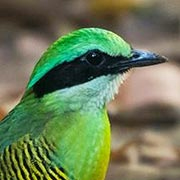
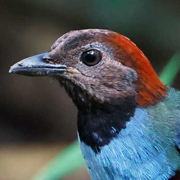
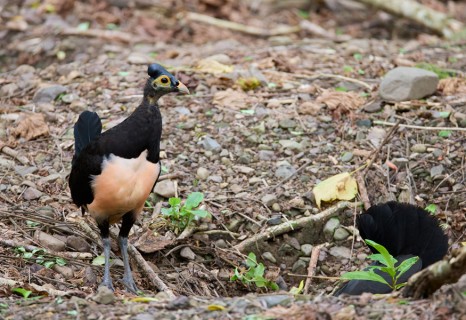
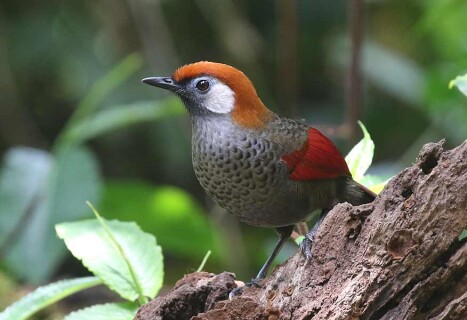
At the end of April 2009 I spent a few days at Khao Soi Dao Wildlife Sanctuary in Chantaburi province. I was hoping to see any of the specialities of the site: Eastern Green Magpie, Blue-rumped Pitta, Siamese Partridge and Rufous-throated Fulvetta.

Unhappily I failed to get even a sniff of any of these birds and after rereading Charles Davies’s trip report it seems that one must get higher up the mountain for these birds.

Well, apart from no sign of any of those birds birding was good. Blue-winged Pitta was absurdly common and easy to see - I saw at least 10 different birds well. Other nice species that I saw were a male Banded Kingfisher, a couple of pairs of Banded Broadbills, Dusky Broadbill, Orange-breasted Trogon, 3 Pompadour Green Pigeons (lots of Thick-billed), Scaly-breasted Partridge and Black-browed Fulvetta.

Whilst I am always a birder first and foremost, what really made the trip (apart from nice accommodation and food) was the huge number of butterflies present.

I managed to creep up on only a fraction of the butterflies present as I have to get very close as I am only using a small compact digital camera (Nikon Coolpix 7600), but at one spot lots of butterflies were feeding on rotting fruit and this seemed to make them drowsy and more approachable - I guess they were getting drunk on the natural alcohol being produced as the fruit decomposed.

For those who are interested I have made a few updates on the Khao Soi Dao page of thaibirding.com, which include details of where I stayed: Khao Soi Dao and the identity of most of these butterflies. 

, , , ,

30 May

Thailand Birding: Eared Pitta Photograph

Sometimes when you are birdwatching, you just get lucky.

 One morning in March I was birding at Khao Yai National Park with Merl & Marty Arnot and it seemed that our luck was out with light but persistent rain and poor visibility. After watching a number of common birds like Black-naped Oriole, Green-eared Barbet, Asian Fairy Bluebird and Scarlet Minivet, I suggested a walk on the loop trail near the old HQ where I had seen Eared Pittas before.

Excellent Views of Male and Female Eared Pittas
We had walked only about 400 metres along the trail when a brownish bird flew from the ground along the trail in front of us and luckily landed within view. All three of us managed to get an excellent view of a female Eared Pitta, foraging around in the undergrowth. After some time I heard more rustling around a short distance away and saw the male. We watched both birds at a distance of about 10 metres for roughly 10 minutes before Merl asked if he could get closer for a photo. Given the light and the fact that he would have to be very close I didn’t think there was much chance but the Pittas didn’t seem concerned by us so I told him to go ahead.

The Photo
Merl sneaked forward a step at a time and unbelievably got to within about 5 metres of the male Eared Pitta. Even so, with the poor light conditions, the fact that Merl was not using flash and that the Pitta was constantly moving its head as it foraged I thought the chance of a decent shot was very slim indeed. Then, as if on cue, the Pitta froze, totally motionless, allowing Merl to get a photo even in very low light conditions - amazing.

Here is the photograph.

, , , ,

25 May

Thailand Birding: Khao Yai in the Wet

Khao Yai national park is one of the busiest national parks in Thailand and at certain times (typically public holidays in the dry season) it can get uncomfortably busy. However, it was lovely to visit the park in mid May this year (16th-18th) and to see the park with very few other people around.

Now, very few birders make the trip to Thailand in the wet season and it is certainly true that a dry season visit will produce many more species, but I actually find the wet season very good for birding in the forest and this trip lived up to that.

In fact it wasn’t really wet at all with only about 1 hour’s birding being lost to rain.

Birds such as Red-headed and Orange-breasted Trogon were easy to find and broadbills were very vocal so it didn’t take much effort to see Banded, Silver-breasted and Long-tailed Broadbills in one morning. Lots of other resident species were abundant and easily seen, species like Thick-billed Pigeon, Moustached Barbet, Green-eared Barbet, Oriental Pied Hornbill, Green Magpie etc were all nice. One of the highlights, as ever, were fantastic views of Great Hornbills. I have seen this species 100s of times but it is still always a highlight of any trip for me.

Another couple of nice birds which I wouldn’t really expect to see outside the rainy season were a Stork-billed Kingfisher at Pa Gluyai Mai campsite and 3 Hooded Pittas in a territorial dispute.

Other Wildlife

Apart from an abundance of birds, this trip also turned up a lot of other wildlife, including this  White-banded Hedge Blue butterfly above which was feeding on rotting fruit.

The wet season is the best time to see elephants at Khao Yai and sure enough there was one sub adult at a salt lick by the side of the road one evening. The commonest mammals at Khao Yai are Variable Squirrel, Pig-tailed Macaque, Sambar, Muntjac and Cambodian Striped Squirrel and these were frequently seen. Other mammals that I saw included Yellow-throated Marten, Common Palm Civet, Golden Jackal, Grey-bellied Squirrel and a fantastic White-handed Gibbon laying back on branch taking an afternoon nap.

For the real wildlife enthusiast there were a whole range of lizards all around, including some water monitors and a wonderful python on the road one night.

All in all you shouldn’t let the rainy season put you off of visiting Thailand for birdwatching, although the leeches were quite voracious!

, , , ,

15 May

Thailand Birding: MK Restaurant Bird Themed Coasters

MK is a chain of restaurants in Thailand that serve cook-it-yourself food. Basically you get a pot of boiling water, fresh vegetables and plates of meat/seafood to cook yourself; it is what is known as a suki style restaurant.

Recently, they have been using a set of coasters that feature birds. primarily they are birds of Thailand but there is also a selection of birds from around the world - big colourful birds like flamingo and toucan. Here are the ones that I have; collected by my wife’s family.

Click on the above pictures to see a large size version and look out an amusing typo.

MK Restaurants also have their own website for those that are interested: MK Restaurants.

, , ,

07 May

How to be a Good Birdwatcher

Recently I was thinking of how to pass on tips on how to be a good birdwatcher onto other people and how to get feedback and more suggestions from a wider audience. I settled on making a page on Squidoo.com which gives a few tips on the subject and contains a guest book where people can add their own birding tips/suggestions; “How to be a Good Birdwatcher“. 

In brief here are the first ten tips (more will follow):

1. Learn Bird Songs and Calls.
2. Become a member of your local Birdlife International Partner
3. Do a Bird Survey
4. Buy a Digital Camera
5. Start a Birdwatching Blog
6. Get some good quality Binoculars
7. Get a Harness Strap
8. Learn to Walk Quietly
9. Feed The Birds
10. Get Yourself a “Local Patch”

Please take a look at the page “How to be a Good Birdwatcher” and make any additions you may have either here or in the guestbook. Thanks.

, , ,

05 May

Thailand Birding: Hornbill at Ban Maka

Those birders visiting Kaeng Krachan and wishing to stay in comfort rather than camping in the national park, have a choice of a number of places close to the forest. I usually use Ban Maka which is a pleasant place to stay with air conditioned rooms, private bathrooms and excellent food as well as having helpful staff.

One of the features at Ban Maka is their tame Oriental Pied Hornbill which was given to the owner after a local had become tired of it. The hornbill goes by the name of Gak Gak ( the Thai name for this species is Nok Gak) and can be somewhat overfriendly. A bit of finger drumming on the table usually sees Gak Gak come swooping down looking for a tickle or some food.

The trouble is that he doesn’t seem to know when enough is enough and he often takes to stealing food from your plate or pulling your shoe laces and after the first night his company wears a bit thin.

If you are going to feed the bird then he seems to like rice and chicken and sometimes fruit.

It is worth noting that there are a couple of wild Oriental Pied Hornbills that visit the garden of Ban Maka but Gak Gak doesn’t seem to be interested and never flies away with them; in fact, judging by his behaviour, he was taken from a nest when a small chick and has spent his whole life around humans.

If you go to Ban Maka you will meet him soon enough and he may be a highlight of your stay, or perhaps the biggest irritation.

, , , ,

30 Apr

Thailand Birding: Rusty-cheeked (Tickell’s Brown) Hornbill

Rusty-cheeked Hornbill is a recent split from Brown Hornbill and this taxon has been adopted by the BCST on their latest checklist of the birds of Thailand; formerly it was known as the tickelli subspecies of Brown Hornbill. At Kaeng Krachan this species is fairly easy to see with most sightings being between the Bang Krang campsite and stream 3. Sometimes this species can be quite unobtrosive but often gives itself away with its manic screeching.

The bird in the photos below was part of a flock of 9 birds and was checking out a nest hole beside the road at Kaeng Krachan in late February 2009. This was a nest hole which had been used the previous year by a pair which had successfully reared chicks and I have a vivid memory of them passing lizards to the young birds.

The BCST issued accompanying notes with their checklist and these make interesting reading; here I reproduce the notes on Rusty-cheeked Hornbill.

Rusty-cheeked Hornbill Anorrhinus tickelli and Brown Hornbill A. austeni
P. Poonswad (Hornbill Project Thailand; unpubl. data) has suggested that the genetic distance between these two taxa is at least as great as that between Great Hornbill Buceros bicornis and Rhinoceros Hornbill B. rhinoceros, and on this basis we tentatively treat them as distinct species following some earlier authors (e.g., Kemp 1988). It should be noted, however, that the vocalisations of the two “brown hornbill” taxa are very similar. In addition, although the females are highly distinctive, A. tickelli being dark-billed and A. austeni being pale billed, occasional whitish-throated male A. tickelli that appear inseparable from typical male austeni have been observed in tickelli groups (Anak Pattanavibool, in litt.).

, , , ,

11 Mar

Thailand Birding: Siberian Rubythroat at Bueng Boraphet

Over the last few months I have made a couple of visits to Bueng Boraphet in Nakorn Sawan province. This site is most famous for its waterbirds and a boat trip with the excellent Mr Phanom is memorable experience for birders and non-birders alike. Any boat trip at Bueng Boraphet is likely to provide lots of sightings of species such as Purple Swamphen, Pheasant-tailed Jacana, Bronze-winged Jacana, Purple Heron, Oriental Darter, Asian Openbill Stork, Lesser Whistling Duck and Cotton Pygmy Goose with many other species likely during the northern winter. However, another highlight for many people is the Siberian Rubythroat that Mr Phanom has provided food for and is now easily observed at close range.

For photographers this particular Siberian Rubythroat is especially attractive as this species is usually very skulking and the photo opportunities this bird provides are very unusual. I took a couple of reasonable photos with a digital camera through my binoculars.

Here is a link to a video clip was taken by Daniel Lopez Velasco in mid February 2009 and shows what a beautiful and obliging bird it is: Siberian Rubythroat at Bueng Boraphet.

Whilst this particular Siberian Rubythroat at Bueng Boraphet is particularly easy to see, in the same area we found 4 more Rubythroats skulking around in dry undergrowth; the dry margins of Bueng Boraphet are one of the best places in Thailand I know of to find this tricky, skulking species.

, , , ,

10 Mar

Butterflies at Kaeng Krachan

Kaeng Krachan national park is well-known for its birdlife but it is also a fantastic place to find a huge variety of butterflies. At certain times of the year, during the wet season for example, it is worth staying out on the trails all day to find birds; things slow down during the middle of the day but good birds can still be found. However, right now in the dry season it gets really hot in the afternoon and there is almost no activity, making bird finding very difficult and tiring. A good option at this time of year is to spend some time at the second stream a little along the road from Bang Krang campsite to observe the butterflies in the mid day heat.

The butterflies congregate around the stream to take in minerals and quite often there are large flocks with many species amongst them. Some photographers put down a mixture of fish sauce and water to attract the butterflies to exactly the right spot, but there always seem to be enough butterflies present not to have to bother with this.

People with good quality cameras will be able to take some really excellent photos, and even with my small, compact digital camera some nice pictures can be obtained with patience.

, , ,

10 Mar

Thailand Birding: Laem Pak Bia/Pak Thale & Tung Bang Jak

The shorebird sites of Laem Pak Bia and Pak Thale are well-known and frequently visited birding locations but by combining a visit to these areas with some time at the rice fields of Tung Bang Jak a wide variety and large number of species can easily be seen in a short space of time.

Recently, I was joined by a group of Dutch birders, Pierre van der Wielen, Marco Witte, Rob Struyk and Alma Leegwater, who spent one and a half days in the area. We easily saw the target species of Spoon-billed Sandpiper, White-faced Plover, Nordmann’s Greenshank and Malaysian Plover giving us time to visit Tung Bang Jak on our second afternoon.

Tung Bang Jak is an area of rice fields and other mixed agriculture which can be reached by turning left at the new road bridge which crosses the Petkasem Highway about 1.5 kilometres before reaching Petchaburi.


Green Bee-eater by Marco Witte 

When we arrived there were a number of areas where rice stubble was being burned, and this seemed to attract large raptors; presumably large insects, small rodents and lizards were easy to find in these conditions. With 5 pairs of sharp eyes and Pierre’s expertise in raptors we saw 15-20 Black Kites, 5 or 6 Brahminy Kites, 1 adult Imperial Eagle, 2 sub-adult Steppe Eagles, 2 Greater Spotted Eagles, a juvenile Eastern Marsh Harrier, 1 Common Kestrel and a Booted Eagle.

Apart from the raptors, other interesting birds were 18 Yellow-breasted Buntings (a species which seems to be very scarce these days), 150+ Streaked Weavers at a pre-roost site with large numbers of Baya Weavers, 60+ Red-throated Pipits, 13 Grey-headed Lapwings as well as a single Cinnamon Bittern, Yellow Bittern, Oriental Reed Warbler, Slaty-breasted Rail and Bluethroat.

In all we saw more than 130 species in one and a half days and had an excellent time.

More photos from the trip can be viewed at Marco Witte’s gallery: Birds of Laem Pak Bia/Pak Thale & Tung Bang Jak.

, , , ,


Compare cheap loans in the UK
with totallymoney.com
PROTECT YOUR FAMILY GET QUOTE
Life Insurance
Secured Loans
UK Quotes
Holiday Insurance


© 2009 Dartford Waffler | Entries (RSS) and Comments (RSS)

Birding Top 500 Counter